
45+ Years Criminal Defense
Experience in California





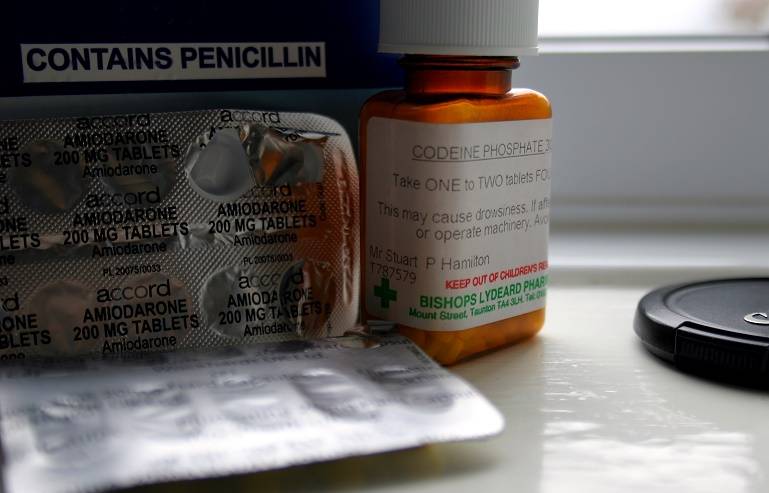
Possessing codeine without a valid prescription, or beyond the scope of the prescription, is a felony in California.1 Depending on the circumstances of your arrest, prosecutors may file additional charges to or in lieu of a possession charge.
Codeine is a controlled substance. It is a type of opiate also known as a drug or narcotic derived from the opium poppy plant that dulls the senses and has a sedative effect.2 This means that it could reduce irritability and excitement, and it tends to calm nervousness. However, higher doses of the drug may result in slurred speech, poor judgment and slow, unpredictable reflexes. Codeine was the first opiate derived drug that was made into an over-the-counter drug and it is currently the most prescribed drug in the world. Codeine is a “pain killer.”
Codeine is known to be mixed with other medications such as cough syrup or Tylenol. Tylenol with codeine is used to relieve mild to moderate pain. It could also be prescribed to suppress a cough. Because Tylenol with codeine is prescribed for the common cold, prescriptions for it are prevalent, and thus there is a tendency for abuse. Codeine has also been added to many cancer and HIV medications.3
The United States “Controlled Substances Act” regulates the manufacturing and possession of controlled substances. The Controlled Substances Act lists codeine under three different Schedules, depending on the amount of dosage.4 Codeine by itself, or in a dosage more than 90 mg per dose, is a Schedule II drug. Codeine mixed with other medications in a lower dose is listed as Schedule III or Schedule V drug. The differences between the three schedules in which codeine is listed under are as follows:
“Schedule II” Drugs
“Schedule III” Drugs
“Schedule V” Drugs
Most people who abuse codeine begin by using the drug for legal medical purposes. It is common for people to become addicted to its strong pain-killing ability and to continue to use it for abusive purposes. Others use the drug for pleasure because they enjoy the side effects, specifically, the numbing of pain and the feeling of euphoria
Abusing codeine has serious side effects. Some of the side effects include:

Some examples of actions that could trigger your arrest for a drug crime involving codeine include:
The following are additional crimes you could be prosecuted for that relate to codeine:
Health & Safety Code § 11351, California’s “possession of a controlled substance for sale” law is a more serious crime, as it relates to possessing the drugs for sale as opposed to possessing them for personal use. If convicted of this felony, you face either probation with up to a year in county jail, or two, three, or four years in county jail.
An even more serious crime is illegally selling codeine. Illegally selling codeine could result in being sentenced to prison for three, four or five years. Codeine can be legally sold in an over-the-counter formula; however, this is rare because very few places in California or the United States will sell codeine formulas without a prescription.9
Another serious crime is CA Health & Safety Code § 11370.1, possession of a controlled substance while armed. Under this section, it is a felony to unlawfully possess certain controlled substances while knowingly armed with a loaded, operable firearm. You face imprisonment in state prison for to two, three of four years for this crime.
Lastly, you are in violation of California’s “being under the influence of a controlled substance” law if you are under the influence of codeine and you do not have a valid prescription, or your use of codeine is beyond the scope of your prescription, i.e. taking more than you are prescribed. This offense is a misdemeanor and may result in jail time of 90 days to a year.10
California has several laws that regulate the possession of codeine, and its use and sales. Because codeine is frequently abused, it is often illegally used, possessed and sold.
In order to convict you with possessing codeine in violation of California Health & Safety Code §11350, a prosecutor must be able to prove beyond a reasonable doubt the following:
Your experienced criminal defense attorney can raise several defenses to a charge of simple possession of codeine. Some of these defenses include:
Possession of codeine is a felony in California. If you are convicted of this offense, you face either:
Possessing specific “controlled substances” without a valid prescription is prohibited by CA Health & Safety Code 11350. California’s illegal drug possession law prohibits you from possessing certain prescribed drugs without a valid prescription. Codeine is an example of a controlled substance that is frequently prescribed and frequently abused.
In order to prove that you are guilty of “possessing” codeine, violating the Health & Safety Code §11350, the prosecutor must prove beyond a reasonable doubt that:
Let’s dissect each of these elements so that we can better understand California codeine laws.

Possession of codeine is unlawful when you do not have a valid prescription for it. Furthermore, you do not have to actually hold or touch the codeine to possess it. It is enough if you have control over it, or the right to control it, either personally or through another person. However, agreeing to buy a controlled substance does not, by itself, mean that a person has control over that substance.
In California criminal law generally, the legal definition of “possession” can refer to three different legal meanings. It could refer to “actual” possession, “constructive” possession or “joint” possession. Possessing an illegal narcotic under any of these definitions is illegal.
Actual Possession
“Actual” possession of a controlled substance means that you have direct and immediate physical control over it, meaning that the drug is on your person. For example, you have the drug in your pocket, in your purse, briefcase or backpack, or even inside one of your body cavities. Even if the codeine is not on your person (on you) when the police conduct their search, but it is obvious that you possessed the codeine shortly beforehand, you can still be charged.
Constructive Possession
“Constructive” possession over a controlled substance means that the drugs were not found on your person but were found in a location over which you exercise control. This could be direct control or control through another person. For example, the police find a stash of un-prescribed codeine in your desk. However, you are not home when the search takes place, thus the police did not find you in actual possession of the codeine. The police could find you in “constructive” possession of the drug and may charge you with Health & Safety Code § 11350.12
Keep in mind that simply having access to a controlled substance, or simply being near the drugs (or near someone else who has the drugs) is not, by itself, sufficient to constitute possession.
Joint Possession
Joint possession means that you and at least one other person share either actual or constructive possession. This could be actual, where, for example, you and a friend are both carrying the codeine on your person, or constructive possession where the codeine is found in your home that you share with a spouse or roommate.
In order for you to be convicted of possession of a controlled substance, the prosecution must prove beyond a reasonable doubt that:
If you did not know that the codeine was present, or if you did not know what the drug was, then you should be acquitted of this offense. For example:
Knowing the precise chemical makeup of the drug is not necessary with respect to the second type of knowledge required. If you know that the drug is a controlled substance, that knowledge is sufficient to satisfy this element of the crime.13
This element of the crime requires that you possess enough of the drug so that it can be used as a controlled substance. This means that there has to be enough of the drug so that it can be used as a drug. 14
However, that does not mean that there has to be enough of the controlled substance to have a “narcotic effect”, meaning the effect it is ordinarily expected to produce.
There are various legal defenses to a possession charge that a skilled drug crime lawyer could argue on your behalf. The most common legal defense for a charge of simple possession of codeine is that you had a valid prescription for the codeine that you possess.
Valid Prescription
The most common legal defense to a California codeine-related offense for possessing or using codeine is that you used or possessed the drug in strict compliance with a valid prescription. This defense does not apply if you:
If you cannot establish that you had a valid prescription, there are still a variety of defenses to codeine-related offenses such as mistaken identity, a violation of an individual’s 4th amendment rights, or police misconduct.
Mistaken Identity
Another common defense is mistaken identity. You may be able to show that the codeine in fact belonged to another person, and the police were incorrect by assuming that it was yours.
Lack of Knowledge
As mentioned above, all of the elements of the crime must be met in order for you to be convicted of possessing a controlled substance. Hence, in order to be convicted of possessing a controlled substance you must:
For example: You lend your jacket to your friend, Tom. Tom got some un-prescribed codeine and put a bottle of pills in the inside pocket of your jacket. Tom forgot to take the bottle out when he gave you back your jacket. A few days later, you are stopped and frisked by the police and they find the bottle of codeine in your jacket. They arrest you for Health & Safety Code 11350: possession of a controlled substance. However, because the codeine did not belong to you, and you did not know it was there until the police found it, you have a valid legal defense to the charges against you.
Additionally, you must have been aware that the drugs you possessed were an illegal controlled substance. If you did not know that the drugs were illegal, this is a valid defense to the charge.
Illegal Search and Seizure
An illegal search and seizure is also a defense to California codeine-related offenses. An illegal search and seizure is one conducted by police in violation of California’s search and seizure laws. Police are in violation of search and seizure law if they have searched you without a valid California search warrant or if they lack probable cause that criminal activity occurred. Even if police have a valid search warrant, they may still be in violation of search and seizure laws if they go beyond what is allowed by the search warrant.
If there has been an illegal search or seizure, your attorney can file a motion to suppress evidence. If the court grants this motion, the evidence will be the excluded, and it is likely the case will be dismissed.

A conviction of this felony may result in 16 months, or two or three years in county jail, and a maximum of $20,000 fine, or probation and up to a year in county jail.15
If you are not a citizen of the United States, and you are convicted for possession of illegal drugs, you could be deported, denied reentry and denied naturalization.16
Defendants who are found guilty of this felony may qualify to participate in drug treatment instead of serving time in jail or prison, depending on their criminal record. This is called “Drug Diversion”, and it is authorized under: Proposition 36, Penal Code 1000 PC, and California drug courts. Drug diversion allows some people who have committed non-violent drug possession offenses to serve their sentences in drug treatment programs in lieu of jail or prison. Once you successfully complete drug diversion, you may be qualified to have your drug charge dismissed.
The following are some Frequently Asked Questions (FAQ’s) from other clients facing charges of possession of a controlled substance in violation of CA Health & Safety Code § 11350.
Yes. You can be charged with possession of a controlled substance even if you did not intend to sell or use the drugs. The key issues are whether you had knowledge of the drug’s presence and whether you had control over it. It is not important for what purpose you planned to use the drugs so long as the prosecution can prove these two elements.
3. Should I be convicted of HS 11350(a) if I was not aware of the drug’s presence?
No. In order to convict you of possession of a controlled substance under CA Health and Safety Code section 11350, the prosecution must prove that you knew of the presence of the drug at the time it was found to be in your possession. If you had no knowledge of the drug’s presence you should not be convicted of this offense.
Yes. Possession of a controlled substance not only includes illegal drugs such as heroin or methamphetamine, but it can also encompass a wide variety of legal prescription drugs. If you are found to be in possession of prescription medication and do not have a valid prescription from a licensed doctor, your possession of the drugs is considered illegal and you can be convicted under Health and Safety Code Section 11350.
Yes. In order to be convicted of possession of a controlled substance, you do not actually need to be holding or touching the drug to be found in possession of it. Constructive possession exists when the drug is found in an area over which you exercise control. Therefore if the substance is found in your car, bedroom or any other area which you are likely to exert control, you can be prosecuted for possession.

If you or someone you know has been charged with possession of codeine, a controlled substance in violation of California Health and Safety Code section 11350, contact one of our experienced criminal defense attorneys at Wallin & Klarich today. You could be prosecuted for a felony, which could lead to jail time, heavy fines, loss of your professional license and loss of your right to possess a firearm. If you are not a U.S. citizen, you could also be deported.
Our attorneys at Wallin & Klarich have over 40 years of experience defending clients facing criminal drug charges. Hiring an attorney from Wallin & Klarich may be your best chance to avoid the serious consequences of a conviction for possession of a controlled substance.
With offices in Los Angeles, Sherman Oaks, Torrance, Tustin, San Diego, Riverside, San Bernardino, Ventura, West Covina and Victorville, our criminal defense attorneys at Wallin & Klarich are available 24 hours a day, 7 days a week to provide you with the very best legal representation. We are dedicated to giving you the personal attention you expect to help you through this difficult time. We are here to help you get the best result possible in your case.
Call us today at (877) 4-NO-JAIL or (877) 466-5245 for a free telephone consultation. We will get through this together.
1. CA Health & Safety Code § 11350↩
2. http://www.drugabuse.gov">http://www.drugabuse.gov↩
3. Id.↩
4. http://www.deadiversion.usdoj.gov/schedules/index.html↩
5. 21 U.S.C. Section 812↩
6. Id.↩
7. Id.↩
8. http://www.drugabuse.gov">http://www.drugabuse.gov↩
9. CA Health and Safety Code § 11352↩
10. CA Health and Safety Code § 11550↩
11. CA Health & Safety Code § 11350↩
12. People v. Mardian (1975) 47 Cal.App.3d 16↩
13. People v. Guy (1980) 107 Cal.App.3d 593, 600-601↩
14. People v. Leal (1966) 64 Cal.2d 504, 512↩
15. CA Health and Safety Code 11350 HS↩
16. 8 U.S. Code Section 1227↩
Double-click this headline to edit the text.

