
45+ Years Criminal Defense
Experience in California





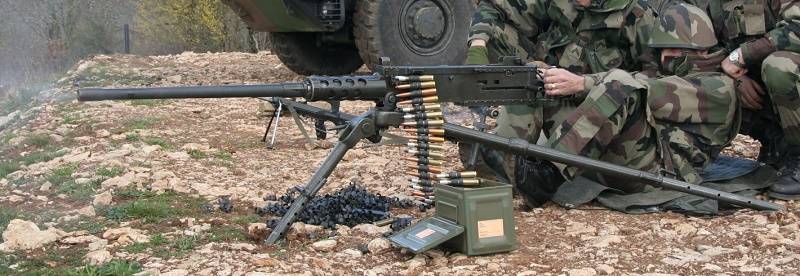
California Penal Code section 30600 regulates the manufacture and transfer of two kinds of firearms: 1) those that are classified as assault weapons, and 2) a specific type of rifle, the .50 Browning Machine Gun (.50 BMG). The law states:
“Any person who, within this state, manufactures or causes to be manufactured, distributes, transports, or imports into the state, keeps for sale, or offers or exposes for sale, or who gives or lends any assault weapon or any .50 BMG rifle, except as provided by this chapter, is guilty of a felony, and upon conviction shall be punished by imprisonment pursuant to subdivision (h) of Section 1170 for four, six, or eight years.”1
The possession or ownership of these weapons is controlled under two separate statutes. California Penal Code section 30605 prohibits possession of an assault weapon, and California Penal Code section 30610 prohibits possession of a .50 BMG rifle.
Under current law, the “definition” of assault weapon in California is principally based on how the weapon is configured. Generally speaking, assault weapons can have any number of characteristics, including, but not limited to:
The definition covers numerous types of pistols, shotguns, and rifles. The Penal Code also provides a non-exhaustive list of 70 specific weapons that are designated as assault rifles, any of which would qualify for punishment under Penal Code sections 30600 and 30605.3
Like many other firearm control measures, there are a number of exceptions to the ban on assault weapons and .50 BMG rifles that will allow you to legally posses, manufacture, or sell these firearms. Some of these exceptions include:
Though the acts that are prohibited by each of these codes are slightly different, the elements of each crime are fundamentally the same. In order for you to be convicted of any one of these crimes, the prosecutor must prove beyond a reasonable doubt that you meet the following elements:

A violation of California Penal Code section 30600 is a felony. Manufacturing, distributing, transporting, selling, giving away, or lending assault weapons or .50 BMG rifles is punishable by four, six, or eight years in county jail.
If you are convicted for merely possessing one of these weapons under California Penal Code sections 30605 or 30610, you face a “wobbler” charge, which means that it may be charged as either a felony or misdemeanor. A felony conviction would result in:
A misdemeanor conviction would result in:
However, there are also infraction charges available under California Penal Code sections 30605 and 30610. These are available if it is your first conviction under these sections, you had no more than two weapons, and you meet all of the following criteria:
If you qualify for the infraction charge, you face a fine of $500.
One important note about punishments is each weapon is a separate count. For example, if you are arrested for possessing three assault weapons, you could face 48 months, or six or nine years in county jail, and a fine of $30,000.
Furthermore, the possession or use of an assault weapon while committing another crime is a factor that can be used to enhance your sentence for those crimes. So, for example, if you are convicted of armed robbery, and you had an assault weapon in your possession at the time, you will have another year added to the end of your sentence for robbery. If you actually fired the weapon, you could face an additional three to ten years.
The weapon is not an assault weapon or .50 BMG rifle.
Like many weapon laws, the characteristics of the weapon are critical to the determination of the case. Suppose that you have a pistol with a fixed magazine that in its standard configuration is capable of holding 12 rounds, and that is the sole characteristic that makes your pistol an assault weapon. However, because you wanted to be a law-abiding gun owner, you had the magazine permanently altered to accept only 10 rounds. California Penal Code section 12276.1 does not apply to magazines that have been altered in this manner.5 Therefore, if this is the weapon in question, you have a defense to a charge under California Penal Code section 30600 or section 30605.
You did not know the weapon qualified as an assault weapon.
When you see the phrase “known or reasonably should have known” in a criminal statute, your personal knowledge is an element of the crime, and you cannot be found guilty if you either had no knowledge or if it would have been unreasonable for you to know it.
Suppose in this case you inherited a pistol with the 12-round unaltered magazine from your uncle. You have no experience with guns, you never talked to your uncle about the pistol, you did no research about the model, and you never even pulled the clip from the pistol to determine its capacity. To you, it looks like any other legal pistol, but you decide that you do not want it, and so you decide sell it.
While driving to sell the weapon, you are stopped by the California Highway Patrol for speeding. The officer sees the weapon on the backseat of your car. He examines it and determines that it has a 12-round capacity, and arrests you for possessing an assault weapon under California Penal Code section 30605. Under these facts, you had no actual knowledge of the weapon’s sole illegal characteristic, nor was it reasonable for you to know that it was illegal. Thus, you should have a defense based on your lack of knowledge.
You had a valid permit to specifically possess an assault weapon.
Depending on your personal circumstances, you may be able to apply and be granted permission by California’s Department of Justice to have a valid permit to possess, manufacture, or sell assault weapons or .50 BMG rifles. For example, if you are a person who trains the police on how to use these weapons, you can apply to have one of these permits. However, in order to defend against charges of illegal possession or sale of assault weapons, you must have had a valid permit at the time you were arrested.
Assault weapons laws often repeats the phrase “capable of” when it lists some of the configurations that distinguish assault weapons from other types of weapons. For example, a weapon that is “capable of” having a forward grip attached is an assault weapon.
This means that all that is necessary for your weapon to be considered illegal is that it is has the ability to be adapted with one of the components that would make it an assault rifle, regardless of whether you add the additional component. If it can accept one of these optional components, it is likely to be deemed an assault weapon, and you could be convicted under California Penal Code sections 30600, 30605, or 30610.
For these laws, who made the modification is not generally relevant. More important is when the modification is made. If you had the gun after it became capable of accepting these optional components, you can be charged with possessing an assault weapon, regardless of whether the adaptation was “homemade” or by the manufacturer.
No. Assault weapons laws specifically do not apply to any weapon that is “antique,” which is defined as any weapon produced before January 1, 1899. So, if you own a weapon that would otherwise fit the description of an assault weapon, but it was made before that date, you should not be convicted of possession of an assault weapon.

An assault weapon charge is a serious legal problem. However, if you are facing such a charge, you do not have to do so alone. You can hire an experienced criminal defense attorney who can give you the best chance of keeping your freedom. At Wallin & Klarich, our attorneys have over 40 years of experience successfully defending people like you who have been wrongfully accused of assault weapon crimes. Let us help you, too. We are committed to providing you with the personal attention you deserve, and to helping you overcome this difficult situation.
With offices in Los Angeles, Sherman Oaks, Torrance, Tustin, San Diego, Riverside, San Bernardino, Ventura, West Covina and Victorville, there is a Wallin & Klarich attorney experienced in California criminal defense near you, no matter where you work or live.
Call us today at (877) 4-NO-JAIL or (877) 466-5245 for a free phone consultation. We will be there when you call.
1. Cal. Pen. Code § 30600(a).↩
2. See Cal. Pen. Code §§ 12276.1 and 30515.↩
3. See Cal. Pen. Code § 30510 and 30515 for this list.↩
4. See, Cal. Pen. Code §§ 30625 et seq.↩
5. Cal. Pen. Code § 12276.1, subd. (d).↩
6. https://commons.wikimedia.org/wiki/File:Cal50_Browning_2REI.jpg
Double-click this headline to edit the text.

